Wednesday, February 8, 2023

Scripture Readings

Wednesday, February 8, 2023

Today’s commemorated feasts and saints

Afterfeast of the Meeting. Greatmartyr Theodore Stratelates (“the General”—319). Prophet Zachariah (ca. 520 B.C.). St. Sava II, Archbishop of Serbia (1269).

Before Reading the Holy Scripture

Illumine our hearts, O Master Who lovest mankind, with the pure light of Thy divine knowledge. Open the eyes of our mind to the understanding of Thy gospel teachings. Implant also in us the fear of Thy blessed commandments, that trampling down all carnal desires, we may enter upon a spiritual manner of living, both thinking and doing such things as are well-pleasing unto Thee. For Thou art the illumination of our souls and bodies, O Christ our God, and unto Thee we ascribe glory, together with Thy Father, Who is from everlasting, and Thine all-holy, good, and life-creating Spirit, now and ever and unto ages of ages. Amen.

2 Peter 3:1-18

1 This second epistle, beloved, I now write unto you; in both which I stir up your pure minds by way of remembrance: 2 That ye may be mindful of the words which were spoken before by the holy prophets, and of the commandment of us the apostles of the Lord and Saviour: 3 Knowing this first, that there shall come in the last days scoffers, walking after their own lusts, 4 And saying, Where is the promise of his coming? for since the fathers fell asleep, all things continue as they were from the beginning of the creation. 5 For this they willingly are ignorant of, that by the word of God the heavens were of old, and the earth standing out of the water and in the water: 6 Whereby the world that then was, being overflowed with water, perished: 7 But the heavens and the earth, which are now, by the same word are kept in store, reserved unto fire against the day of judgment and perdition of ungodly men. 8 But, beloved, be not ignorant of this one thing, that one day is with the Lord as a thousand years, and a thousand years as one day. 9 The Lord is not slack concerning his promise, as some men count slackness; but is longsuffering to us-ward, not willing that any should perish, but that all should come to repentance. 10 But the day of the Lord will come as a thief in the night; in the which the heavens shall pass away with a great noise, and the elements shall melt with fervent heat, the earth also and the works that are therein shall be burned up. 11 Seeing then that all these things shall be dissolved, what manner of persons ought ye to be in all holy conversation and godliness, 12 Looking for and hasting unto the coming of the day of God, wherein the heavens being on fire shall be dissolved, and the elements shall melt with fervent heat? 13 Nevertheless we, according to his promise, look for new heavens and a new earth, wherein dwelleth righteousness. 14 Wherefore, beloved, seeing that ye look for such things, be diligent that ye may be found of him in peace, without spot, and blameless. 15 And account that the longsuffering of our Lord is salvation; even as our beloved brother Paul also according to the wisdom given unto him hath written unto you; 16 As also in all his epistles, speaking in them of these things; in which are some things hard to be understood, which they that are unlearned and unstable wrest, as they do also the other scriptures, unto their own destruction. 17 Ye therefore, beloved, seeing ye know these things before, beware lest ye also, being led away with the error of the wicked, fall from your own stedfastness. 18 But grow in grace, and in the knowledge of our Lord and Saviour Jesus Christ. To him be glory both now and for ever. Amen.

Mark 13:24-31

24 But in those days, after that tribulation, the sun shall be darkened, and the moon shall not give her light, 25 And the stars of heaven shall fall, and the powers that are in heaven shall be shaken. 26 And then shall they see the Son of man coming in the clouds with great power and glory. 27 And then shall he send his angels, and shall gather together his elect from the four winds, from the uttermost part of the earth to the uttermost part of heaven. 28 Now learn a parable of the fig tree; When her branch is yet tender, and putteth forth leaves, ye know that summer is near: 29 So ye in like manner, when ye shall see these things come to pass, know that it is nigh, even at the doors. 30 Verily I say unto you, that this generation shall not pass, till all these things be done. 31 Heaven and earth shall pass away: but my words shall not pass away.

ADAM, WHERE ARE YOU? By Geronta Symeon Kragiopoulos (+2015)

Homily 4: Are You Making Progress Toward God,

or Toward Your Own Idol?

The Parable of the Rich Fool  [Luke 12:16-21]

[Part 14b of 15]


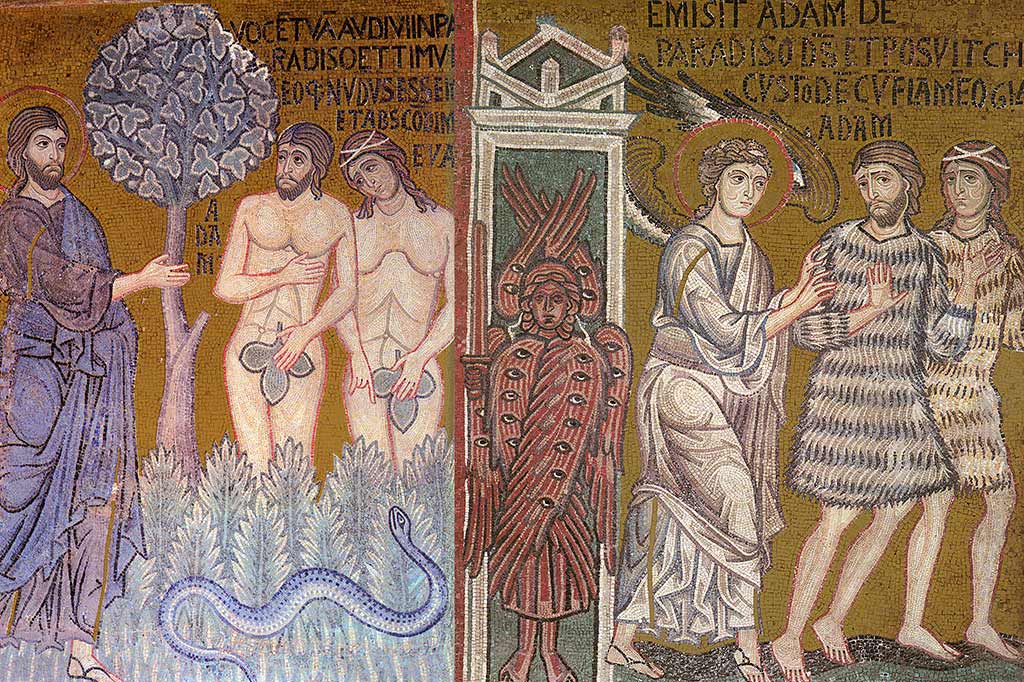
“Until the very last second, as long as we are in this world, let no one take the liberty and say,  Im done.  I  escaped unharmed.  The evil that was committed in Paradise when man sinned  this evil does not vanish quite so  easily.  Death is a consequence of sin.  When does death cease?  When we die.  Until that time, the other consequences of sin  [falling into one or more of the demonic passions] persist; they lie in wait.

Orthodox Agape by papademetrios

Witnessing

February 8, 2023 Abbot Tryphon

Lives Transformed Give Witness to the Faith

That our Orthodox Church possesses the totality of Apostolic Truth is a given, yet if in our weakness as believers, the obviousness of that Truth is invisible to others, we will have betrayed that Truth. If in our weakness we fail to be an image of Christ, and love and joy appear to be absent to those who are initially drawn to Orthodoxy, visitors to our temples will see only beautiful rituals, but the beauty of the mystical theology of our faith will remain invisible to them.

For Orthodoxy to be seen as different from other faiths, love and joy must be manifested in our lives, and others must know we are of Christ by the transformed lives we are leading. They must see in us the impact this faith has had upon our souls, for a faith that leads not to transformation, but only rests in beautiful temples and forms of worship, will not impart the sublime theology that is rooted in our relationship with Jesus Christ.

“When the pagans hear from our mouths the oracles of God, they marvel at their beauty and greatness. But when they discover that our actions are not worthy of the words we speak, they turn from wonder to blasphemy, saying that it is a myth and a delusion (Saint Clement of Alexandria).”

Love in Christ,
Abbot Tryphon

Photo: Interior of The Cathedral of the Mother of God “Joy of All Who Sorrow” in San Francisco, California.


In Christ,
Sdn. Daniel Rudder
www.crosscrafter.com
www.web-printsolutions.com
www.buttercupvalleyfarm.com
469-556-6179

Wednesday, February 1, 2023

Scripture Readings

Wednesday, February 1, 2023

Today’s commemorated feasts and saints

Forefeast of the Meeting. Martyr Tryphon of Lampsacus near Apamea in Syria (250). Martyrs Perpetua, a woman of Carthage, and the Catechumens: Saturus, Revocatus, Saturninus, Secundulus and Felicitas (202-203). Ven. Peter Galata, Hermit, near Antioch in Syria (429). Ven. Vendemianus (Bendemianus), Hermit, of Bithynia (ca. 512). Ven. Bridget (Brigid) of Ireland (523).

Before Reading the Holy Scripture

Illumine our hearts, O Master Who lovest mankind, with the pure light of Thy divine knowledge. Open the eyes of our mind to the understanding of Thy gospel teachings. Implant also in us the fear of Thy blessed commandments, that trampling down all carnal desires, we may enter upon a spiritual manner of living, both thinking and doing such things as are well-pleasing unto Thee. For Thou art the illumination of our souls and bodies, O Christ our God, and unto Thee we ascribe glory, together with Thy Father, Who is from everlasting, and Thine all-holy, good, and life-creating Spirit, now and ever and unto ages of ages. Amen.

1 Peter 4:1-11

1 Forasmuch then as Christ hath suffered for us in the flesh, arm yourselves likewise with the same mind: for he that hath suffered in the flesh hath ceased from sin; 2 That he no longer should live the rest of his time in the flesh to the lusts of men, but to the will of God. 3 For the time past of our life may suffice us to have wrought the will of the Gentiles, when we walked in lasciviousness, lusts, excess of wine, revellings, banquetings, and abominable idolatries: 4 Wherein they think it strange that ye run not with them to the same excess of riot, speaking evil of you: 5 Who shall give account to him that is ready to judge the quick and the dead. 6 For for this cause was the gospel preached also to them that are dead, that they might be judged according to men in the flesh, but live according to God in the spirit. 7 But the end of all things is at hand: be ye therefore sober, and watch unto prayer. 8 And above all things have fervent charity among yourselves: for charity shall cover the multitude of sins. 9 Use hospitality one to another without grudging. 10 As every man hath received the gift, even so minister the same one to another, as good stewards of the manifold grace of God. 11 If any man speak, let him speak as the oracles of God; if any man minister, let him do it as of the ability which God giveth: that God in all things may be glorified through Jesus Christ, to whom be praise and dominion for ever and ever. Amen.

Mark 12:28-37

28 And one of the scribes came, and having heard them reasoning together, and perceiving that he had answered them well, asked him, Which is the first commandment of all? 29 And Jesus answered him, The first of all the commandments is, Hear, O Israel; The Lord our God is one Lord: 30 And thou shalt love the Lord thy God with all thy heart, and with all thy soul, and with all thy mind, and with all thy strength: this is the first commandment. 31 And the second is like, namely this, Thou shalt love thy neighbour as thyself. There is none other commandment greater than these. 32 And the scribe said unto him, Well, Master, thou hast said the truth: for there is one God; and there is none other but he: 33 And to love him with all the heart, and with all the understanding, and with all the soul, and with all the strength, and to love his neighbour as himself, is more than all whole burnt offerings and sacrifices. 34 And when Jesus saw that he answered discreetly, he said unto him, Thou art not far from the kingdom of God. And no man after that durst ask him any question. 35 And Jesus answered and said, while he taught in the temple, How say the scribes that Christ is the son of David? 36 For David himself said by the Holy Spirit, The LORD said to my Lord, Sit thou on my right hand, till I make thine enemies thy footstool. 37 David therefore himself calleth him Lord; and whence is he then his son? And the common people heard him gladly.

ADAM, WHERE ARE YOU? By Geronta Symeon Kragiopoulos (+2015)

Homily 4: Are You Making Progress Toward God,

or Toward Your Own Idol?

The Parable of the Rich Fool  [Luke 12:16-21]

[Part 10 of 15]


Therefore, repentance, change, self-correction, abandonment of sin and positive action consist of this primary thing: ceasing from moving toward yourself, a halting of all this egocentricity and selfishness (in other words, this self-love and the careful attention to please the self), and moving instead toward God.  This movement is nothing but love.   You shall love the Lord your God with all your heart, with all your soul, and with all your mind  and your neighbor as yourself  [Matt. 22:37-39] .  Love toward our neighbor exists within the same spirit.  Nowadays, when people speak about love, love for them has become a personal pursuit for nourishment of the ego.  In reality, however, true  love does not seek its own  [I Cor. 13:5], … but gives and is offered.  One gives himself to God and to one s neighbor.

Orthodox Agape by papademetrios

Blessed is the Kingdom

February 1, 2023 Abbot Tryphon

Blessed is the kingdom of the Father and the Son and the Holy Spirit

The Divine Liturgy begins with the words, Blessed is the kingdom of the Father and the Son and the Holy Spirit, now and forever and to the ages of ages. This kingdom is our true home and our lives as Christians are centered around the great expectation of the coming of this kingdom, which shall be eternal. This kingdom is our true Fatherland, and this present life is meant as a time of preparation for this coming kingdom.

There is no promise of peace in this present life, but the kingdom to come will be filled with an eternal peace, the peace that passes all understanding. In this kingdom our entire being, our very souls, will be forever united with God and filled with a joy that is beyond our present comprehension. This present life passes quickly, but the life to come will be eternal.

Love in Christ,
Abbot Tryphon


In Christ,
Sdn. Daniel Rudder
www.crosscrafter.com
www.web-printsolutions.com
www.buttercupvalleyfarm.com
469-556-6179

Presentation of Christ to the Temple

Presentation of Christ to the Temple

February 2


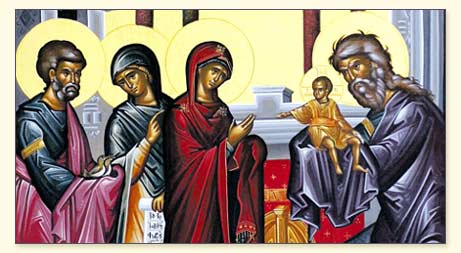
Icon of The Presentation of Christ written by the hand of Athanasios Clark and used with permission. © Greek Orthodox Archdiocese of America

Introduction

This feast, celebrated on February 2, is known in the Orthodox Church as The Presentation of Christ in the Temple. Another name for the feast is The Meeting of our Lord. Roman Catholic and Protestant Christians call the feast, The Purification of the Holy Virgin. About 450 AD in Jerusalem, people began the custom of holding lighted candles during the Divine Liturgy of this feast day. Therefore, some churches in the West refer to this holy day as Candlemas. The Feast of the Presentation concludes the observances related to the Nativity of Christ, a period that opened on November 15 with the beginning of the Nativity fast.

Biblical Story

The story of the Presentation is told in Luke 2:22-29. Mary and Joseph were faithful Jews and observed their religious customs. An important custom was for the couple to take their first-born son to the Temple. The baby was taken to the Temple forty days after his birth and was dedicated to God. In addition, if the parents were wealthy, they were to bring a lamb and a young pigeon or a turtle dove to be offered as a sacrifice at the Temple. The custom provided that if the parents were poor, they were to offer two pigeons or two turtle doves for the sacrifice.

Joseph and Mary were not wealthy, so they took two turtle doves with them to offer as a sacrifice at the Temple.

When Jesus was forty days old, Mary and Joseph took Him to the Temple in Jerusalem. They were not wealthy, so they took two turtle doves with them to offer as a sacrifice at the Temple. As they arrived at the Temple, Mary and Joseph were met by a very old man named Simeon. He was a holy man and was noted as a very intelligent scholar. Simeon spent much time studying about the prophets of Israel. It was during his studies that he learned of the coming of the Messiah. The Jewish people were waiting for the Messiah to come and deliver Israel from their conquerors. From that time on, Simeon spent his time praying for the Messiah to come. He spent many years in prayer. Finally, while Simeon was praying he heard the voice of God. God promised Simeon that he would not die until he had seen the Messiah.

When Simeon saw Jesus, he took the baby in his arms and blessed the Lord and said:”Lord, now let Your servant go in peace according to Your promise, because my eyes have seen Your salvation which you have prepared before the face of all peoples, a light to bring revelation to the Gentiles, and the glory to your people Israel.”


Simeon took Jesus in his arms and praised God.

Also, in the Temple was Anna the Prophetess. She had been a widow for many years. Anna was about eighty-four years old and spent her time in the Temple worshiping, fasting, and praying. When she saw the Christ Child she praised God and spoke of him to all who were awaiting the Messiah.

After Jesus was presented in the Temple, the family returned to Galilee to the town of Nazareth. The Bible tells us that Jesus grew and became strong, and was filled with wisdom.

Icon of the Feast

The Holy Icon shows that the meeting takes place inside the Temple and in front of the altar. The altar has a book or a scroll on it and is covered by a canopy. The Theotokos stands to the left and is holding out her hands in a gesture of offering. The one hand of the Theotokos is covered by her cloak or as it is known, the maphorion. She has just handed her Son to Simeon.


The Theotokos is holding out her hands in a gesture of offering and humility.

Christ is shown as a child, but He is not in swaddling clothes. He is clothed in a small dress and his legs are bare. Jesus appears to be giving a blessing. Simeon holds Jesus with both hands which are covered. This shows the reverence Simeon had for the Messiah. Simeon is bare headed and there is nothing to show that he is a priest. Some biblical scholars say that Simeon was probably a priest of the Temple or a Doctor of the Law.

Joseph is behind the Theotokos. He is carrying the two turtle doves for the sacrifice. Anna the Prophetess is also standing behind the Theotokos and is pointing to the Christ child.


Joseph offers the sacrifice of a poor family while Anna the Prophetess praises God and “speaks about the child to all who were looking for the redemption of Jerusalem.” Luke 2: 38

The words Simeon spoke when he saw the Christ Child are known as “St. Simeon’s Prayer.” This prayer is sung daily at the evening Vespers services of the Orthodox Church.

In the Orthodox Church, both baby boys and baby girls are taken to the Church on the fortieth day after their birth. This is done in remembrance of the Theotokos and Joseph taking the infant Jesus to the Temple.

Orthodox Celebration of the Feast of the Presentation

This Feast of our Lord is celebrated with the Divine Liturgy of Saint John Chrysostom, which is conducted on the day of the Feast and preceded by the Matins service. A Great Vespers is conducted on the evening before the day of the Feast. Scripture readings for the Feast are the following: at Great Vespers – extracts from Exodus 12:15-13:16; Leviticus 12 and Numbers 8; Isaiah 6:1-12, and 19:1,3-5,12,16,19-21; at Matins – Luke 2:25-32; at the Divine Liturgy –Hebrews 7:7-17 and Luke 2:22-40.

Resources

The Story of the Icons by Dr. Mary Paloumpis Hallick.

The Festal Menaion translated by Mother Mary (South Canaan, PA: St. Tikhon’s Seminary Press, 1969) p. 60.

The Incarnate God: The Feasts of Jesus Christ and the Virgin Mary, Cathering Aslanoff, editor and Paul Meyendorff, translator (Crestwood, NY: St. Vladimir’s Seminary Press, 1995).

Festival Icons for the Christian Year by John Baggley (Crestwood, NY: St. Vladimir’s Seminary Press, 2000), pp. 40-47.

https://www.goarch.org/presentation


In Christ,
Sdn. Daniel Rudder
www.crosscrafter.com
www.web-printsolutions.com
www.buttercupvalleyfarm.com
469-556-6179

Sunday of the Publican and Pharisee

Introduction

The Sunday of the Publican and the Pharisee is the first Sunday of a three-week period prior to the commencement of Great Lent. It marks the beginning of a time of preparation for the spiritual journey of Lent, a time for Orthodox Christians to draw closer to God through worship, prayer, fasting, and acts of charity. It is also on this day that the Triodion is introduced, a liturgical book that contains the services from this Sunday, the tenth before Pascha (Easter), to Great and Holy Saturday.

Biblical Story

The name for this Sunday is taken from the parable of our Lord Jesus Christ found in Luke 18:10-14. This is the story of two men, one a Pharisee, a member of a Jewish sect known for its diligent observance of the Law, and the other a Publican, a government official charged with the responsibility of collecting taxes.

Both men enter the temple, and the Pharisee stands openly and prays, thanking God that he is not like other men, specifically extortioners, the unjust, adulterers, “or even this tax collector” (v. 11). He then begins to list his religious accomplishments by stating, “I fast twice a week, and I give tithes of all that I possess” (v. 12).

In direct contrast to the pride of the Pharisee, the Publican goes to a place where he will not be noticed by others and beats his breast saying, “God, be merciful to me a sinner!” (v. 13).

Having told this story, Jesus affirms that it was the Publican who returned home justified and forgiven rather than the Pharisee. He states, “Everyone who exalts himself will be humbled, and he who humbles himself will be exalted” (v. 14).

The theme of this parable is repentance. Repentance is the door through which we enter Lent, the starting-point of the journey to Pascha. To repent signifies far more than self-pity or futile regret over things done in the past. The Greek term metanoia means “change of mind.” To repent is to be renewed, to be transformed in our inward viewpoint, to attain a fresh way of looking at our relationship with God and with others. The fault of the Pharisee is that he has no desire to change his outlook; he is complacent, self-satisfied, and so he allows no place for God to act within him. The Gospel depicts him as a man that is pleased only with himself who thinks that he has complied with all of the requirements of religion. But in his pride, he has falsified the meaning of true religion and faith. He has reduced these to external observations, measuring his piety by the amount of money he gives.

The Publican, on the other hand, truly longs for a “change of mind.” He humbles himself, and his humility justifies him before God. He becomes, in the words of the Sermon on the Mount (Matthew 5:3), “poor in spirit.” He acknowledges that he is a sinner, and he knows that salvation is only found in the mercy of God. Here we find an example of true humility, an essential aspect of repentance. A “change of mind” and the transformation of our lives can only happen when we humble ourselves before God, acknowledge our willingness to turn from sin, and receive His grace into our lives.

Our preparation for Lent thus begins with a prayer for humility, the beginning of true repentance. Through repentance, we can find and return to the true order of things, a restoration of our spiritual vision that will guide us in a very difficult and challenging world. By entering Great Lent in humility and repentance, we can attain deeper communion with God as we receive His forgiveness and He blesses by guiding us to greater spiritual heights.

Icon of the Feast

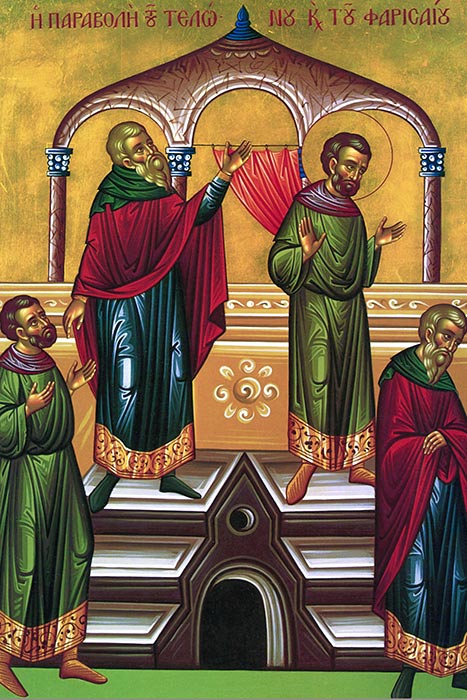
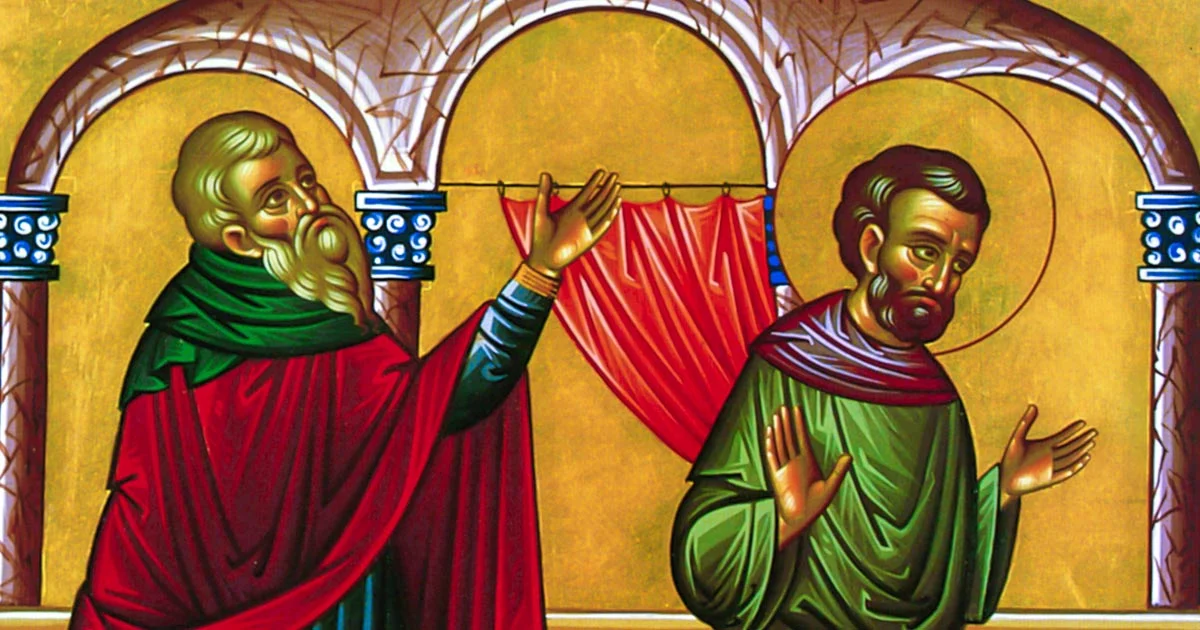
The icon of the Sunday of the Publican and the Pharisee shows both men in the manner in which they enter the temple to pray. The Pharisee goes to a very prominent place where others will see him. The positions of his hands indicate that he is addressing God by speaking of his stature and accomplishments. In contrast, the Publican enters and remains in a low place, far from the holiest parts of the temple. His posture shows his openness to God, his humility, and his petition for mercy.

The icon also shows the state of both men as they leave the temple. Following the words of Christ in Luke 18:14, the Publican has now been exalted in the kingdom of God because of his humility. He leaves the temple forgiven, and he shows that he remains open to the will of God. In contrast, the Pharisee leaves the temple unjustified, still in need of forgiveness. Because of his pride and lack of repentance, he will be humbled before God, the One who knows the condition of each person’s soul and who will offer the gift of salvation to those who come to Him in true repentance.

Orthodox Christian Celebration of The Sunday of the Publican and the Pharisee

The Sunday of the Publican and the Pharisee is celebrated with the Divine Liturgy of Saint John Chrysostom, which is preceded by the Matins service. A Great Vespers is conducted on Saturday evening. The hymns of the Triodion for this day are added to the usual prayers and hymns of the weekly commemoration of the Resurrection of Christ. The naming of the Sunday is related to the reading of the story from the Gospel at the Divine Liturgy.

Scripture readings for the Sunday of the Publican and the Pharisee are: At the Orthros (Matins): The prescribed weekly Gospel reading. At the Divine Liturgy:  II Timothy 3:10-15 Luke 18:10-14 .

The week that follows the Sunday of the Publican and Pharisee is designated by the Church as a non-fasting week. All foods are allowed on everyday of the week, including Wednesday and Friday. This dispensation from fasting is offered as a way of indicating that Great Lent and a more intense fasting period is approaching.

Hymns and Prayers of The Sunday of the Publican and the Pharisee »

Doxastikon of the Aposticha, Saturday Vespers (Tone plagal of the first)

Mine eyes are weighed down by my transgressions, and I cannot lift them up and see the height of heaven. But receive me, Savior, in repentance as the Publican and have mercy on me.

Troparion after “Have Mercy”, Matins Service (Tone plagal of the second)

Have mercy upon me, O God, according to Thy loving kindness and according to the multitude of Thy tender mercies blot out my transgressions.

As I ponder in my wretchedness the many evil things I have done, I tremble for the fearful day of judgment. But, trusting in Thy merciful compassion, like David do I cry out to Thee: have mercy upon me, O God, in Thy great mercy.

Doxastikon of the Ainoi, Matins Service (Tone Plagal Fourth)

O Lord, Thou hast condemned the Pharisee who justified himself by boasting of his works, and Thou hast justified the Publican who humbled himself and with cries of sorrow begged for mercy. For Thou dost reject proudminded thoughts, but Thou dost not despise a contrite heart. Therefore in abasement we fall down before Thee who hast suffered for our sake: grant us forgiveness and great mercy.

Kontakion (Tone Four)

Let us flee the proud speaking of the Pharisee and learn the humility of the Publican, and with groaning let us cry unto the Savior: Be merciful to us, for Thou alone art ready to forgive.

References

The Lenten Triodion. translated by Mother Mary and Kallistos Ware (South Canaan, PA: St. Tikhon’s Seminary Press, 1994), pp. 44, 99-111.
Schmemann, Alexander. Great Lent: Journey to Pascha (Crestwood, New York: St. Vladimir’s Seminary Press, 1969), pp. 18-21.
Barrois, Georges. Scripture Readings in Orthodox Worship (Crestwood, New York: St. Vladimir’s Seminary Press, 1977), pp. 21-24.
Farley, Donna. Seasons of Grace: Reflections on the Orthodox Church Year (Ben Lomond, CA: Conciliar Press, 2002), pp. 77-80.
Icon of the Publican and the Pharisee provided by Theologic and used with permission.


In Christ,
Sdn. Daniel Rudder
www.crosscrafter.com
www.web-printsolutions.com
www.buttercupvalleyfarm.com
469-556-6179
Scripture Readings Friday, December 30, 2022

Scripture Readings

Friday, December 30, 2022

Today’s commemorated feasts and saints

Afterfeast of the Nativity of Christ. Virgin Martyr Anysia at Thessalonica (285-305). Martyr Zoticus, Keeper of Orphans (4th c.). Apostle of the Seventy, Timon the Deacon (1st c.). Martyr Philoterus of Nicomedia (311). Ven. Theodora of Cæsarea in Cappadocia (8th c.). Ven. Theodora of Constantinople (10th c.). Monastic Martyr Gideon of Karakallou (Mt. Athos—1818). St. Makáry, Metropolitan of Moscow and All Russia (1563).

Before Reading the Holy Scripture

Illumine our hearts, O Master Who lovest mankind, with the pure light of Thy divine knowledge. Open the eyes of our mind to the understanding of Thy gospel teachings. Implant also in us the fear of Thy blessed commandments, that trampling down all carnal desires, we may enter upon a spiritual manner of living, both thinking and doing such things as are well-pleasing unto Thee. For Thou art the illumination of our souls and bodies, O Christ our God, and unto Thee we ascribe glory, together with Thy Father, Who is from everlasting, and Thine all-holy, good, and life-creating Spirit, now and ever and unto ages of ages. Amen.


Hebrews 7:18-25

     18 For there is verily a disannulling of the commandment going before for the weakness and unprofitableness thereof. 19 For the law made nothing perfect, but the bringing in of a better hope did; by the which we draw nigh unto God. 20 And inasmuch as not without an oath he was made priest: 21 (For those priests were made without an oath; but this with an oath by him that said unto him, The Lord sware and will not repent, Thou art a priest for ever after the order of Melchisedec:) 22 By so much was Jesus made a surety of a better testament. 23 And they truly were many priests, because they were not suffered to continue by reason of death: 24 But this man, because he continueth ever, hath an unchangeable priesthood. 25 Wherefore he is able also to save them to the uttermost that come unto God by him, seeing he ever liveth to make intercession for them.

Mark 12:1-12

     1 And he began to speak unto them by parables. A certain man planted a vineyard, and set an hedge about it, and digged a place for the winefat, and built a tower, and let it out to husbandmen, and went into a far country. 2 And at the season he sent to the husbandmen a servant, that he might receive from the husbandmen of the fruit of the vineyard. 3 And they caught him, and beat him, and sent him away empty. 4 And again he sent unto them another servant; and at him they cast stones, and wounded him in the head, and sent him away shamefully handled. 5 And again he sent another; and him they killed, and many others; beating some, and killing some. 6 Having yet therefore one son, his wellbeloved, he sent him also last unto them, saying, They will reverence my son. 7 But those husbandmen said among themselves, This is the heir; come, let us kill him, and the inheritance shall be our’s. 8 And they took him, and killed him, and cast him out of the vineyard. 9 What shall therefore the lord of the vineyard do? he will come and destroy the husbandmen, and will give the vineyard unto others. 10 And have ye not read this scripture; The stone which the builders rejected is become the head of the corner: 11 This was the Lord’s doing, and it is marvellous in our eyes? 12 And they sought to lay hold on him, but feared the people: for they knew that he had spoken the parable against them: and they left him, and went their way. ADAM, WHERE ARE YOU? By Geronta Symeon Kragiopoulos (+2015)
Homily 2: “Make Straight His Paths  [Mark 1:3][Part 7 of 8] “It is true that such things may not happen consciously, such that one might say: ‘I do not accept Christ.’  No 

one says such lies consciously.  Rather, this  is exactlywhat we must do at this specific hour: not hesitate to enter deeply within our souls, to uncover our own  desolate spiritual condition in its entirety.  The Lord is ready and able to help us.  Let us decimate, in the good sense of the word,  everything inside of us.  Specifically, let us cast out our falsehood, hypocrisy and self-justification, so that our false feelings of comfort and security can vanish.  These things must depart: so that the path can be opened; so that  the Lord, Who is truth and love, can enter into us; so  that we can be genuine and true; so  that true love can enter within not the selfish love that people, nowadays, have among themselves.Orthodox Agape by papademetrios

Mary the Mother of God

Abbot Tryphon

The Place of the Holy Virgin in the Life of a Christian

The Holy Virgin is a stumbling block for many protestants looking into Orthodoxy. The idea that this woman described in the Gospels in such humble terms could be called Mother of God seems unbiblical to them. She was never called Mother of God in the Bible, they say, so why would she be given such an exalted title? She was, they think, simply the mother of Jesus.

From the earliest of times the Church has seen fit to call her exalted among women, even more exalted then the heavenly hosts. Her role in the history of salvation has been seen as pivotal from the time of the very first century for her humility and obedience before God made her the New Eve. Whereby death entered the world through the disobedience of the first mother, Eve, the Holy Virgin became the New Eve the moment she answered, “be it done according to Thy word”, agreeing to be the Mother of Christ.

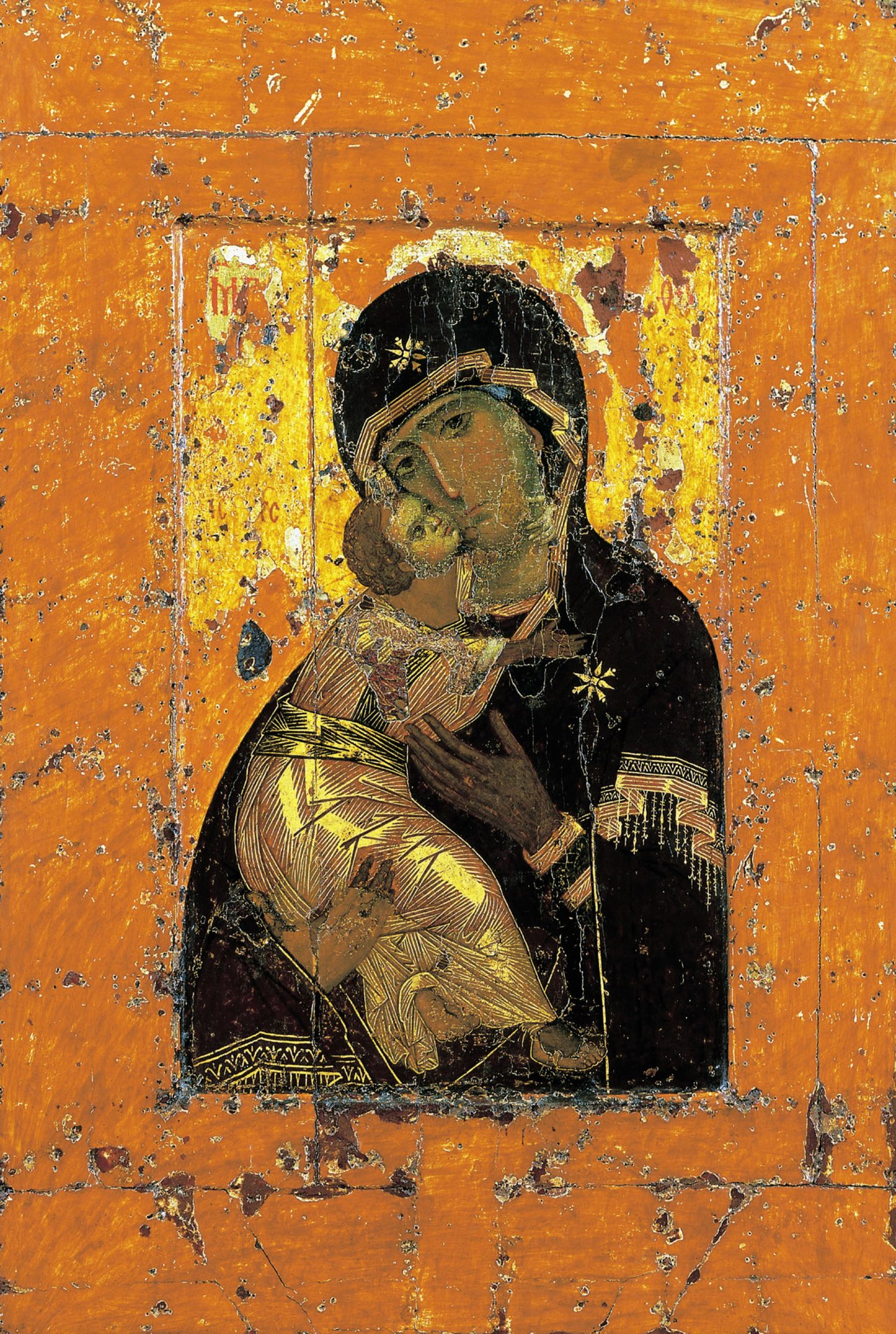
The very first icon was painted depicting Mary holding the child Jesus by none other than the Holy Apostle and Evangelist Luke. The Vladimir Icon of the Mother of God was painted on a board from the table at which the Savior ate together with His All-Pure Mother and Righteous Joseph. The Mother of God, upon seeing this image, exclaimed, “Henceforth, all generations shall call Me blessed. The grace of both My Son and Me shall be with this icon.” She was thus recognized by the Church for her pivotal role with the title Theotokos, which means God-bearer.

The Council of Ephesus  decreed in 431 that Mary is Theotokos because her son Jesus is one person who is both God and man, divine and human. To call her only the mother of Jesus was seen as heretical because to do so would be to suggest that Jesus was simply a man, apart from being God at the same time. The balance of being both God and Man was thus preserved by the Church from the earliest of times.

The angel Gabriel was sent by God to announce to the Virgin the birth of the Saviour:  “Hail, full of grace, the Lord is with thee.  Blessed art thou among women.”  (Luke 1:28)  This angelic salutation forms a part of the hymn of the Church most frequently sung in her honor, in imitation of the words of this angelic messenger of God.  Elizabeth, the Virgin’s cousin, considered it an honor for the Mother of her Lord to visit her.  “And whence is this to me that the Mother of my Lord should come to me?”  (Luke 1:43)  There is no difference between saying “Mother of God” and “Mother of the Lord”.  Surely, God is the Lord! (Psalm 118:27)  During her visit to Elizabeth, the Blessed Virgin spoke the words that form the principal hymn sung in her honor at the Matins service.

My soul doth magnify the Lord, and my spirit hath rejoiced in God my Saviour.  For He hath regarded the low estate of His handmaiden, for, behold, from henceforth all generations shall call me blessed.”  (Luke 1: 47-48)

Elizabeth, having been “filled with the Holy Spirit”, cried out:  “Blessed art thou among women, and blessed is the fruit of thy womb.”  (Luke 1:41, 42)  This honor given the Theotokos by her cousin is exactly what all generations of the Church do when they call her blessed.  When Jesus beheld His mother and His disciple John standing by the cross, He entrusted him with her care, but He also established a new spiritual relationship between them in saying to the disciple:  “Behold thy Mother!” (John 19:27)  In making this declaration our Lord made His Mother the Mother of all Christians!

With love in Christ,
Abbot Tryphon

Photo: The Vladimir Icon of the Mother of God, painted by Saint Luke the Apostle.


In Christ,
Sdn. Daniel Rudder

www.crosscrafter.com
www.web-printsolutions.com
www.buttercupvalleyfarm.com
469-556-6179

What are the 12 Days of Christmas?

Fr. Andrew George

The commemoration of the Nativity of our Lord, the Baptism of our Lord, and the events related to them developed over time in the life and practice of the Church. Originally celebrated together on the same day, their celebrations – and the sequence of 12 days in between them – offers the faithful a festal period of great joy.

History

As they designated dates to commemorate events in Jesus’ life, the early Christian Church selected January 6 as the date to observe both the birth and baptism of Christ. In the early 4th century it was felt by the church leadership that a distinction should be made between the two observances. They selected Dec 25 to be the date to celebrate the birth of Christ and kept Jan 6 to be the baptism.

The selection of Dec 25 also addressed a second issue. The end of December was filled with pagan gatherings and festivities (in honor of the “sun god” as he became victorious over the “god of darkness” as the days slowly began to become longer (the winter solstice). Christians were falling back to pagan temptations with these festivities, thus the church fathers wanted to provide them with their own reason to celebrate. This reason of course became the birth of the Son of God (who made the sun).

Once Christmas Arrives

Our Orthodox Church today celebrates highly and with great festivity and joy!  Once Christmas arrives on December 25, we enter a new liturgical period. The major period runs 40 days, from Jesus’ Birth to His 40 day Presentation to the Temple (Feb 2). Within these 40 days is some sub-division.

From December 25 to January 6, there became a 12-day period from the one major celebration to the next major observance. Thus, we have the “12 days of Christmas” that bridge the birth with the baptism and it became a festal period of time of great joy and celebration. As time progressed January 6 began to be called the “little Christmas.” 

We have the 7 day Christmas tide which are part of the 12 Days of Christmas, focusing on immediate events up to His naming & Circumcision on the 8th day (January 1). Henceforth, we begin to prepare for the observance of His Baptism when He was 30 years old. 

The Baptism of Our Lord

In the Orthodox Church January 6 is officially called the Baptism of our Lord – Theophany (sometimes called simply Epiphany).  Theophany means “God’s appearance” and Epiphany simply “appearance”.  On the day of Jesus’ baptism, the Holy Trinity was made manifest with the appearance of the dove and the voice that was heard from the sky (Matt 3:13 – 17). 

The Catholic Church later in history changed January 6 to be the arrival of the Wise men and made the Baptism to be the Sunday after January 6. In our Orthodox observances, the arrival of the Wise men is combined on the same day as the birth. The Armenian Church still retains January 6 as their Christmas commemoration.

The Twelve Days of Christmas

These 12 days that comprise the “12 days of Christmas” also include other observances on various levels. The first level are events that are directly associated to Christ’s birth in the flesh, including the murder of the 14,000 baby boys that Herod ordered when Jesus was born (December 29) and the 8-day naming of Jesus (January 1). 

A second level of observances during these 12 days are commemorations of people from the earliest decades of the spread of the Christian faith after the death and resurrection of Christ and Pentecost, such as St. Stephen (one of the first of the 7 deacons) who became the first martyr in Christianity (December 27); and the “seventy” as they are known, these being the 70 apostles that the 12 apostles trained and sent off to travel and preach (January 4). 

The third level of commemorations of these 12 days are for those who in later centuries lived and honored Christ in marvelous ways and became saints of the church, such as St Melanie of Rome from the 5th century (December 31), St Basil the Great from the 4th century era (January 1), and St Sylvester, Bishop of Rome also from the 4th century (Jan 2).

In its development over many centuries, the twelve days of Christmas that we celebrate today have become a theological and historical cornucopia of both the life of Christ and the life of the Church through its Christian Witness. What follows is a brief review of the themes from each of the twelve days of Christmas.

Day 1 – Dec 25 – The Nativity in the Flesh of our Lord, God and Saviour Jesus Christ

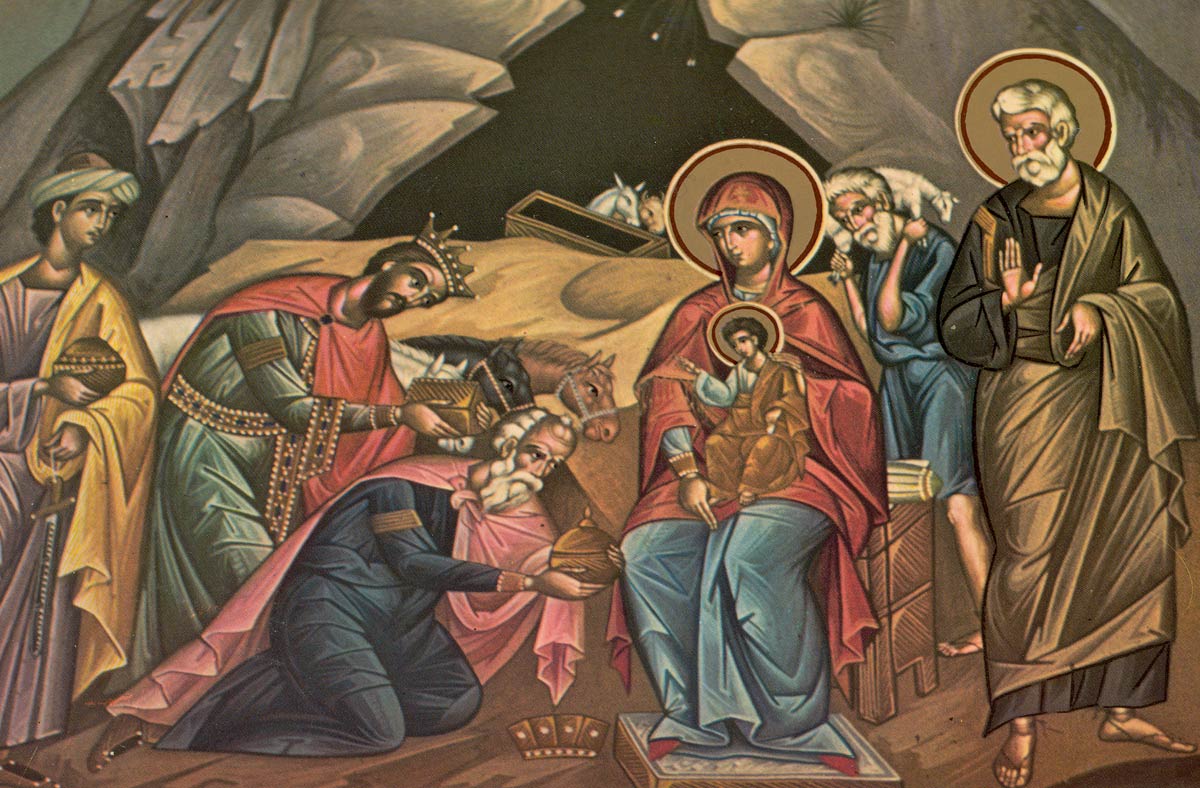
The Shepherd’s worship and the visit of the wise men from the East.

Day 2 – Dec. 26 – Synaxis of the Virgin

Gives Glory and Praise to her, who bore our Lord. Also on the 26th is the commemoration of the Flight into Egypt when an angel warned Joseph of King Herod’s plans to kill the children in Bethlehem.

Day 3 – Dec. 27 – St. Stephen the Deacon and 1st Martyr

He was the 1st of the 7 deacons in the “start up” Christian Church (Acts 7) who was stoned to death by the Jews, in 34 A.D. Tradition says that the Theotokos & St. John the Theologian witnessed the stoning.

Day 4 – Dec. 28 – 20,000 Martyrs of Nicomedia (men, women and children)

An event in 302 AD when the wicked Emperor Maximian Hercules, while visiting in Nicomedia learned of the large number of Christians living there and devised a means to get rid of them. It was the days preceding Christmas that he visited so, on Christmas, as the Christians were in church….his soldier’s surrounded the church, so no one could leave. The Emperor’s envoy gave them a choice to deny Christ and offer sacrifice to the pagan idols, or, be burned to death. The congregation chose death (in fact catechumens were quickly baptized). The soldiers set fire on all 4 sides of the church and the building burned for 5 days The smoke had a fragrant scent and a golden light surrounded the church.

Day 5 – Dec 29 – 14,000 children of Bethlehem (Holy Innocents)

King Herod was furious hearing from the wise men about a new born King in Bethlehem, and ordered that all the babies, 2 yrs and under to be killed in Bethlehem and the surrounding area. This occurred, 1 yr. after the birth. Herod sought out Zachariah’s son, also newly born (John, who later became the Baptizer of Jesus) thinking that John would be the “New King”. When Zachariah refused to hand over baby John, Herod killed Zachariah as he also killed Simeon who had received Christ as the 40 day old baby Jesus. Angered with the Jews in general – Herod also killed Hyrcanes, their high priest and 70 elders from the Sanhedrin (their council). Herod was so enraged that “someone” would take his position – he also killed own brother and sister, as well as his wife and 3 of his sons! What a crazed man!

Day 6 – Dec 30 – Deacon Timon (one of the 7 Deacons)

Also counted as one of the 70 Apostles who became Bishop in Arabia.  He died by crucifixion there in the third century (298AD).  On the same day we have the martyrdom of St Anysia from Thessaloniki, born of wealthy and prominent parents.  She was orphaned young.  She assisted the poor and devoted herself to prayer and fasting. This was the time of Emperor Maximian Hercules again.  One of his decrees was that anyone was free to kill Christians when and where they came across them, without trial or sentences. So as Anysia was out in the streets one day, a soldier approached her and confirmed through direct conversation with her, that she was a Christian.  He ran her through with a knife  under her rib and killed her. This was actually during the days that the pagans had their festival of the sun god (which ultimately became later on in history the date selected for the observance of Christ’s Birth).

Day 7 – Dec 31 – Nothing directly connected to Christmas per se, but 2 important figures of the 4th and 5th Century who witnessed greatly to Christian living.

4th Century – Martyr Zoticus, Protector of the Poor

A priest in Constantinople, who had a home for the poor and those with infectious diseases.  He was a close acquaintance of Emperor Constantine the Great. Constantine’s son (Constantine) was jealous of all the money his dad gave to Zoticus to help the poor and the sick, that he tied Zoticus to the behind of a wild ass and he ultimately died of his wounds.

5th Century – Holy Mother Melanie of Rome

Born to wealthy parents, she was forced to marry a young nobleman. After having 2 children she convinced him that they should live as brother and sister.  Their 2 children died some time later and they agreed to give their possessions to the poor and the church.  They traveled as well to many far away places doing good works along the way.  She ultimately became a nun at the Mt. of Olives in Jerusalem.

Sunday After Christmas – Honor is given Joseph the Guardian (i.e. also called Righteous Joseph), David the King (the son of Jesse) and Iakovos, the (step-brother) of Christ, the 1st bishop of Jerusalem.

Day 8 – Jan 1st  – Circumcision and Naming of Jesus

In observance of Jewish Law since the time of Abraham, Joseph and Mary took baby Jesus to the Temple for circumcision and he was also given the name “Jesus”, the name announced to Mary at the time of the annunciation by Archangel Gabriel (Luke 1:31). This act of circumcision showed that Jesus took true human flesh upon Himself, (not its resemblance as heretics’ would later say about him).

Also on Jan 1st, St. Basil the Great is remembered. Born around 330 A.D. under the reign of Constantine the Great. As an un-baptized person, Basil spent 19 years in Athens studying philosophy, rhetoric, astronomy and other secular disciplines. In his mature years, he was baptized in the Jordan River.  He became ultimately Bishop of Caesarea in Cappadocia, died unfortunately young, at age 50.  He was a great champion of the faith of moral purity and a great theological mind.

Day 9 – Jan 2nd – St. Sylvester, Bishop of Rome

At the age of 30 he was elected a bishop and served for 20 yrs/died in 335 A.D.  He is the one attributed for bringing St. Helen to the Christian faith and ultimately King Constantine himself. He also is credited with “reforming” the Saturday fast (that it would not be a strict fast day) making only Holy Saturday a strict Saturday of fasting.

Jan. 2nd also remembers St. Theodota the mother of the brothers St. Cosmas and Damian, the unmercenary and miracle working doctors.

Day 10 – Jan 3rd – Prophet Malachi (500 yrs. before Christ)

Malachi, is the prophet who prophesied the coming and the mission of John the Baptist (Malachi 3:1).  In fact there was no prophet between Malachi and John. Malachi also prophesied about the dread judgment, against ungrateful Israel and against the lawless Hebrew priests.

January 3rd also remembers Martyr Gordius. Born in Caesarea of Cappadocia/an officer in the  Roman Army in the reign of Emperor Licinius.  After the Army, he went to Sinai (to Mt. Horeb) in contemplation and prayer.  He was stabbed to death in 320 A.D.

Day 11 – Jan 4th – Synaxis of the 70 Apostles

This day honors these men, that Jesus also selected that followed the 12 Apostles (Luke 10:1-11), sending them out 2 by 2 going to every city before He himself has to go. This was similar to the Old Testament period in that Moses also had 70 elders that he appointed – Exodus 18:21, 22; 24:1. The 70 Apostles offered valuable service to Christ in those earliest of years as missionaries.

Day 12 – Jan 5th – Hieromartyr Theopemptos, Bishop of Nicomedia and also Martyr Theonas (a pagan magician)

This was the era of Emperor Diocletian who persecuted Christians. When Theopemptos was brought before the Emperor, he responded to the Emperor’s request to deny Christ, by quoting Scripture – (Matt 10:28) “Fear not them who kill the body, who are unable to kill the soul.” Then he added – do unto my body as you please. Diocletian sent his magician to trick and outdo the bishop…when Theonas saw that  even poison would not hurt the Bishop, he converted to Christ! Theopemptos was then beheaded 298 A.D. Theonas was buried alive 298 A.D.

The Glorious Observance of the Baptism of Our Lord

Jan 5 – The Paromony / Preparation (Strict Fast)
Jan 6 – The Baptism Observance
Jan 7 – Synaxis in honor of St John the Prophet, Forerunner and Baptist

Certainly, these 12 days are of great significance and should be known, honored and lived rightly.

https://www.goarch.org/-/what-are-the-12-days-of-christmas


In Christ,
Sdn. Daniel Rudder

www.crosscrafter.com
www.web-printsolutions.com
www.buttercupvalleyfarm.com
469-556-6179
Tuesday, December 6, 2022

Today’s commemorated feasts and saints

St. Nicholas the Wonderworker, Archbishop of Myra in Lycia (ca. 345). St Maximus (1280).

St. Nicholas the Wonderworker, archbishop of Myra in Lycia.

Before Reading the Holy Scripture

Illumine our hearts, O Master Who lovest mankind, with the pure light of Thy divine knowledge. Open the eyes of our mind to the understanding of Thy gospel teachings. Implant also in us the fear of Thy blessed commandments, that trampling down all carnal desires, we may enter upon a spiritual manner of living, both thinking and doing such things as are well-pleasing unto Thee. For Thou art the illumination of our souls and bodies, O Christ our God, and unto Thee we ascribe glory, together with Thy Father, Who is from everlasting, and Thine all-holy, good, and life-creating Spirit, now and ever and unto ages of ages. Amen.


VESPERS

Proverbs 10:7, 6; 3:13-16; 8:6, 32, 34, 4, 12, 14, 17, 5-9; 1:23

     7 The memory of the just is blessed: but the name of the wicked shall rot. 6 Blessings are upon the head of the just: but violence covereth the mouth of the wicked. 13 Happy is the man that findeth wisdom, and the man that getteth understanding. 14 For the merchandise of it is better than the merchandise of silver, and the gain thereof than fine gold. 15 She is more precious than rubies: and all the things thou canst desire are not to be compared unto her. 16 Length of days is in her right hand; and in her left hand riches and honour. 6 Hear; for I will speak of excellent things; and the opening of my lips shall be right things. 32 Now therefore hearken unto me, O ye children: for blessed are they that keep my ways. 34 Blessed is the man that heareth me, watching daily at my gates, waiting at the posts of my doors. 4 Unto you, O men, I call; and my voice is to the sons of man. 12 I wisdom dwell with prudence, and find out knowledge of witty inventions. 14 Counsel is mine, and sound wisdom: I am understanding; I have strength. 17 I love them that love me; and those that seek me early shall find me. 5 O ye simple, understand wisdom: and, ye fools, be ye of an understanding heart. 6 Hear; for I will speak of excellent things; and the opening of my lips shall be right things. 7 For my mouth shall speak truth; and wickedness is an abomination to my lips. 8 All the words of my mouth are in righteousness; there is nothing froward or perverse in them. 9 They are all plain to him that understandeth, and right to them that find knowledge. 23 Turn you at my reproof: behold, I will pour out my spirit unto you, I will make known my words unto you.

Proverbs 10:31-11:12

     31 The mouth of the just bringeth forth wisdom: but the froward tongue shall be cut out. 32 The lips of the righteous know what is acceptable: but the mouth of the wicked speaketh frowardness. 1 A false balance is abomination to the LORD: but a just weight is his delight. 2 When pride cometh, then cometh shame: but with the lowly is wisdom. 3 The integrity of the upright shall guide them: but the perverseness of transgressors shall destroy them. 4 Riches profit not in the day of wrath: but righteousness delivereth from death. 5 The righteousness of the perfect shall direct his way: but the wicked shall fall by his own wickedness. 6 The righteousness of the upright shall deliver them: but transgressors shall be taken in their own naughtiness. 7 When a wicked man dieth, his expectation shall perish: and the hope of unjust men perisheth. 8 The righteous is delivered out of trouble, and the wicked cometh in his stead. 9 An hypocrite with his mouth destroyeth his neighbour: but through knowledge shall the just be delivered. 10 When it goeth well with the righteous, the city rejoiceth: and when the wicked perish, there is shouting. 11 By the blessing of the upright the city is exalted: but it is overthrown by the mouth of the wicked. 12 He that is void of wisdom despiseth his neighbour: but a man of understanding holdeth his peace.

Wisdom 4:7-15

     7 But though the righteous be prevented with death, yet shall he be in rest. 8 For honourable age is not that which standeth in length of time, nor that is measured by number of years. 9 But wisdom is the gray hair unto men, and an unspotted life is old age. 10 He pleased God, and was beloved of him: so that living among sinners he was translated. 11 Yea speedily was he taken away, lest that wickedness should alter his understanding, or deceit beguile his soul. 12 For the bewitching of naughtiness doth obscure things that are honest; and the wandering of concupiscence doth undermine the simple mind. 13 He, being made perfect in a short time, fulfilled a long time: 14 For his soul pleased the Lord: therefore hasted he to take him away from among the wicked. 15 This the people saw, and understood it not, neither laid they up this in their minds, That his grace and mercy is with his saints, and that he hath respect unto his chosen.


MATINS

John 10:9-16

     9 I am the door: by me if any man enter in, he shall be saved, and shall go in and out, and find pasture. 10 The thief cometh not, but for to steal, and to kill, and to destroy: I am come that they might have life, and that they might have it more abundantly. 11 I am the good shepherd: the good shepherd giveth his life for the sheep. 12 But he that is an hireling, and not the shepherd, whose own the sheep are not, seeth the wolf coming, and leaveth the sheep, and fleeth: and the wolf catcheth them, and scattereth the sheep. 13 The hireling fleeth, because he is an hireling, and careth not for the sheep. 14 I am the good shepherd, and know my sheep, and am known of mine. 15 As the Father knoweth me, even so know I the Father: and I lay down my life for the sheep. 16 And other sheep I have, which are not of this fold: them also I must bring, and they shall hear my voice; and there shall be one fold, and one shepherd.


LITURGY

Hebrews 13:17-21

     17 Obey them that have the rule over you, and submit yourselves: for they watch for your souls, as they that must give account, that they may do it with joy, and not with grief: for that is unprofitable for you. 18 Pray for us: for we trust we have a good conscience, in all things willing to live honestly. 19 But I beseech you the rather to do this, that I may be restored to you the sooner. 20 Now the God of peace, that brought again from the dead our Lord Jesus, that great shepherd of the sheep, through the blood of the everlasting covenant, 21 Make you perfect in every good work to do his will, working in you that which is wellpleasing in his sight, through Jesus Christ; to whom be glory for ever and ever. Amen.

Luke 6:17-23

     17 And he came down with them, and stood in the plain, and the company of his disciples, and a great multitude of people out of all Judaea and Jerusalem, and from the sea coast of Tyre and Sidon, which came to hear him, and to be healed of their diseases; 18 And they that were vexed with unclean spirits: and they were healed. 19 And the whole multitude sought to touch him: for there went virtue out of him, and healed them all. 20 And he lifted up his eyes on his disciples, and said, Blessed be ye poor: for yours is the kingdom of God. 21 Blessed are ye that hunger now: for ye shall be filled. Blessed are ye that weep now: for ye shall laugh. 22 Blessed are ye, when men shall hate you, and when they shall separate you from their company, and shall reproach you, and cast out your name as evil, for the Son of man’s sake. 23 Rejoice ye in that day, and leap for joy: for, behold, your reward is great in heaven: for in the like manner did their fathers unto the prophets.


Tuesday

LITURGY

1 Timothy 1:8-14

     8 But we know that the law is good, if a man use it lawfully; 9 Knowing this, that the law is not made for a righteous man, but for the lawless and disobedient, for the ungodly and for sinners, for unholy and profane, for murderers of fathers and murderers of mothers, for manslayers, 10 For whoremongers, for them that defile themselves with mankind, for menstealers, for liars, for perjured persons, and if there be any other thing that is contrary to sound doctrine; 11 According to the glorious gospel of the blessed God, which was committed to my trust. 12 And I thank Christ Jesus our Lord, who hath enabled me, for that he counted me faithful, putting me into the ministry; 13 Who was before a blasphemer, and a persecutor, and injurious: but I obtained mercy, because I did it ignorantly in unbelief. 14 And the grace of our Lord was exceeding abundant with faith and love which is in Christ Jesus.

Luke 21:12-19

     12 But before all these, they shall lay their hands on you, and persecute you, delivering you up to the synagogues, and into prisons, being brought before kings and rulers for my name’s sake. 13 And it shall turn to you for a testimony. 14 Settle it therefore in your hearts, not to meditate before what ye shall answer: 15 For I will give you a mouth and wisdom, which all your adversaries shall not be able to gainsay nor resist. 16 And ye shall be betrayed both by parents, and brethren, and kinsfolks, and friends; and some of you shall they cause to be put to death. 17 And ye shall be hated of all men for my name’s sake. 18 But there shall not an hair of your head perish. 19 In your patience possess ye your souls.
ADAM, WHERE ARE YOU? By Geronta Symeon Kragiopoulos (+2015) Homily 1: “Repent”[Part 7e 0f 10] There we have it, that which is well-pleasing to God: repentance.  The greatest, most  beautiful and purest offering that a person can offer to God is repentance.  Oftentimes, we think of too many other things.  If, however, we offer our repentance to God, He will be overjoyed   as will the Holy Trinity and all the Angels.  On account of our  repentance, all of God’s work for us will be faithfully confirmed — from the time Adam and Eve fell, but especially from the time the Lord came to earth.” 

Orthodox Agape by papademetrios

Sin as Illness

Abbot Tryphon

Sin is the Sign of Our Illness

In our sense of guilt over our sinful nature, it is quite easy to gaze upon God as though looking upon a judge. We, as sinners, are guilty, and we stand in the dock as one before a judge. Yet the truth of our situation is far more sublime. This relationship with our God is not of a juridical nature, but it is personal. God is not offended by our sin, just as a doctor is not offended by a sick patient, or a mother offended by her sick child.

Because of the darkness of our nous (the eye of the soul), we have forgotten God’s true nature, as well as our relationship to our Creator. We have replaced God with idols of self, and with material things. We have replaced God with people, with music, with social engagements, and in the process have become pagans.

In a word, we have become ill, and we are in need of the cure. The symptoms of our illness abound, but God’s grace abounds in greater amounts, and the doors of the hospital (the Church) open wide to us.

With love in Christ,
Abbot Tryphon