Here is the calendar of all Holy Week services for SS George and Alexandra Church in Fort Smith, Arkansas. If you have any questions about the services, please reach out to Father Alexis.
Here is the calendar of all Holy Week services for SS George and Alexandra Church in Fort Smith, Arkansas. If you have any questions about the services, please reach out to Father Alexis.
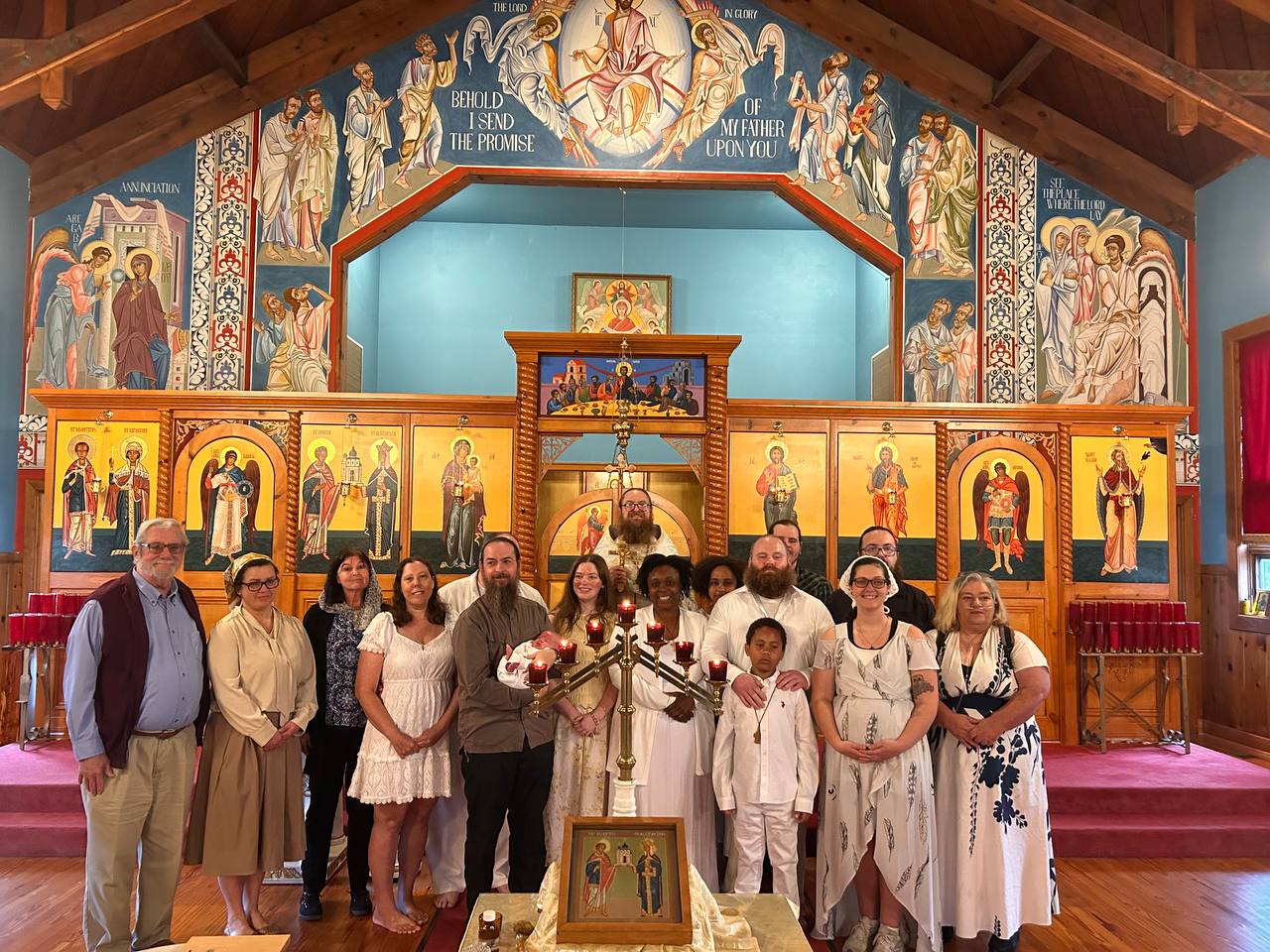
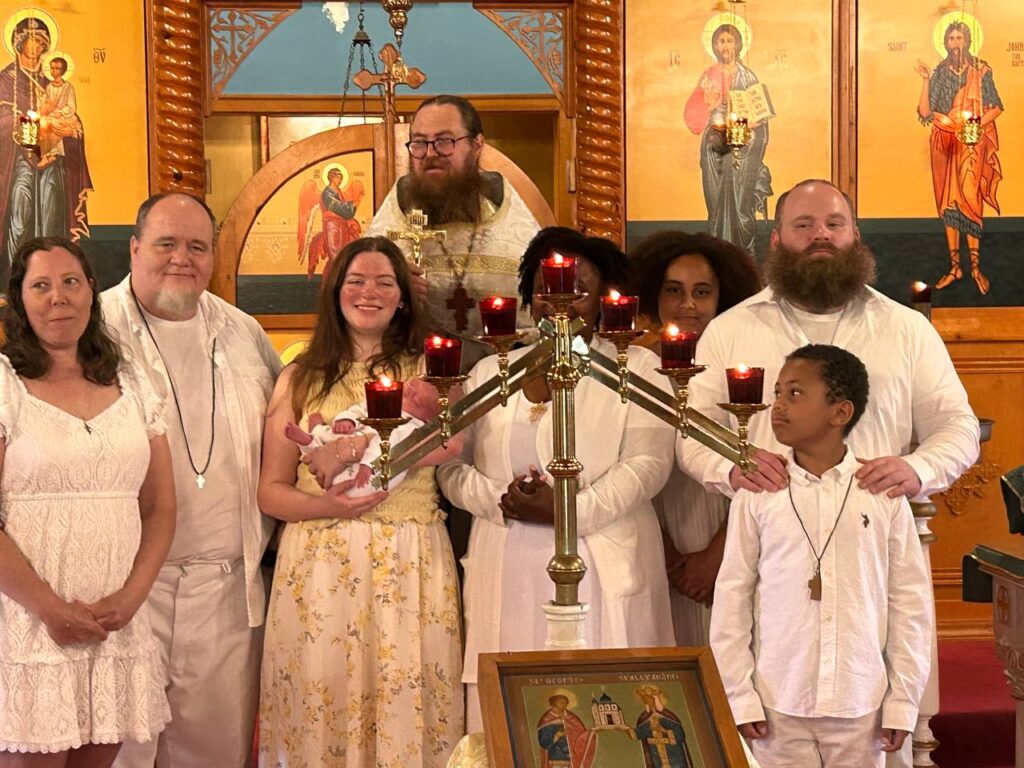
What blessed Lazarus Saturday it was at SS George and Alexandra Church in Fort Smith. We welcomed several catechumens into the church today.
Father Alexis had the honor of baptizing baby Simeon Huff (son of Ben and Edie Huff), Moe and Nicole, and the Emmitt Family (David, Erica, Naomi, and Amare).
May God grant each of them many years. Welcome home to all the newly baptized members!
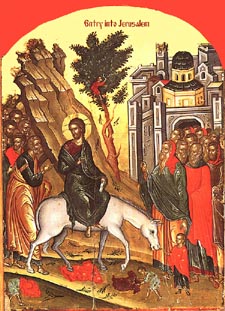
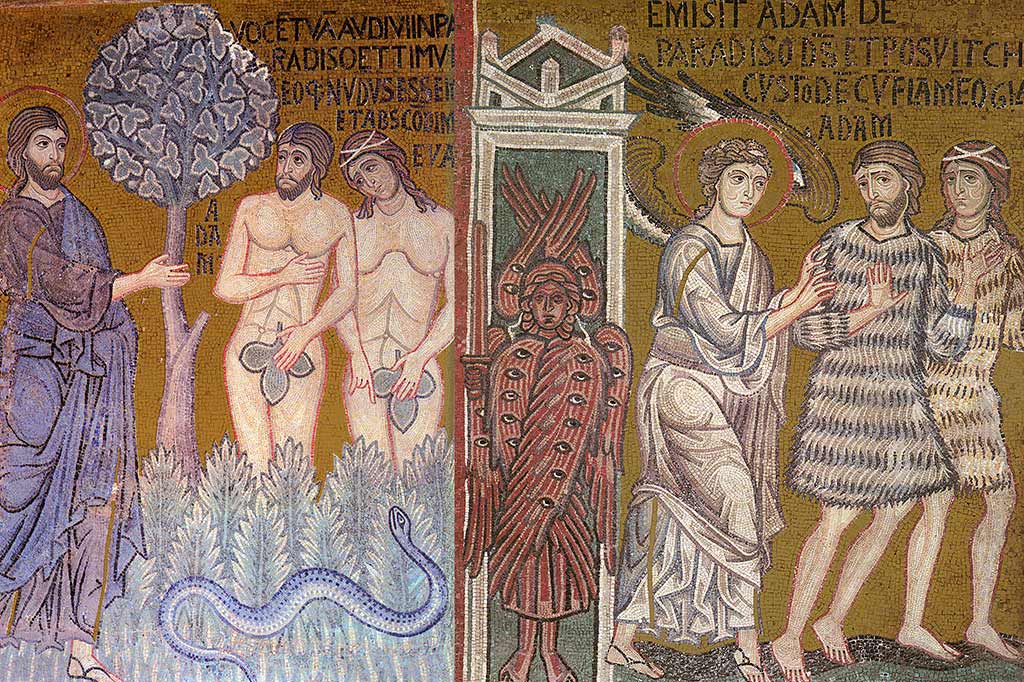
Palm Sunday is the celebration of the triumphant entrance of Christ into the royal city of Jerusalem. He rode on a colt for which He Himself had sent, and He permitted the people to hail Him publicly as a king. A large crowd met Him in a manner befitting royalty, waving palm branches and placing their garments in His path. They greeted Him with these words: “Hosanna! Blessed is he who comes in the name of the Lord, even the King of Israel! (John 12:13).
This day, together with the raising of Lazarus, is a sign pointing beyond themselves to the mighty deeds and events which consummate Christ’s earthly ministry. The time of fulfillment was at hand. Christ’s raising of Lazarus points to the destruction of death and the joy of resurrection, which will be accessible to all through His own death and resurrection. His entrance into Jerusalem is a fulfillment of the messianic prophecies about the king who will enter his holy city to establish a final kingdom. “Behold, your king is coming to you, humble, and mounted on an ass, and on a colt, the foal of an ass” (Zech 9:9).
Finally, the events of these triumphant two days are but the passage to Holy Week: the “hour” of suffering and death for which Christ came. Thus, the triumph in an earthly sense is extremely short-lived. Jesus enters openly into the midst of His enemies, publicly saying and doing those things which mostly enrage them. The people themselves will soon reject Him. They misread His brief earthly triumph as a sign of something else: His emergence as a political messiah who will lead them to the glories of an earthly kingdom.
Palm Sunday is considered a Feast Day, and in most traditions, fish, wine, and oil are eaten. Our coffee hour at SS George and Alexandra is usually celebrated with shared fish dishes.
For more information on Palm Sunday or the Orthodox Church in general, please contact Fr. Alexis at SS. George and Alexandra Church in Fort Smith, AR, or your local parish priest.
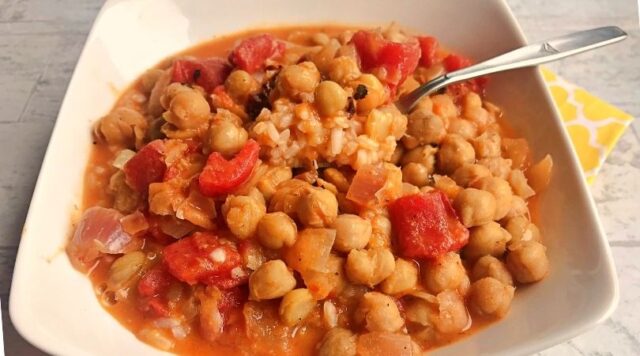
This is one of our favorite one-pot meals for fasting times. It is a hearty Chickpea Curry that can be easily prepared from dry chickpeas or even canned chickpeas. I’ll give you the steps for cooking your curry in a slow cooker in the recipe card below, and then you can keep reading for instructions for cooking this curry in the Instant Pot or on the stovetop.
My recipe calls for cooking the chickpeas from dry chickpeas, but you can also save a lot of time and just use canned chickpeas from the store. This cuts your cooking time down a lot because you don’t have to soak the peas.
In the video I have linked in the recipe card, I show you how to start with canned chickpeas. But see the notes on the recipe card also for directions.
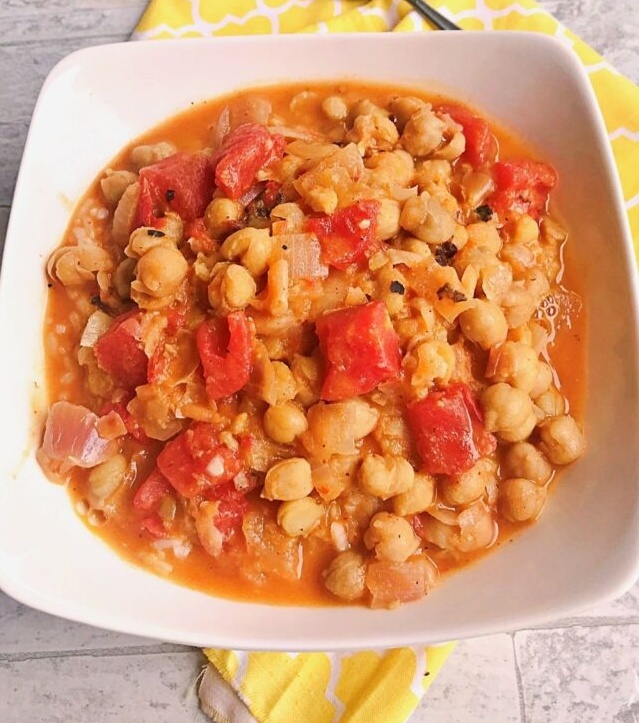
This is a very easy and frugal meal of Chickpea Curry. It is vegan and gluten-free.
You can save a lot of time by starting with canned chickpeas. To do this, add the undrained chickpeas to your slow cooker and add the onions, crushed tomatoes, undrained diced tomatoes, and all the seasonings. If you want more broth, you can add 32 ounces of veggie broth. Cook on low for 2 hours, then add the sweet potatoes, and cook 2 more hours until they are tender. Once cooked, add the coconut milk and stir. Don't forget to taste and add more seasoning if it is needed. Ready to serve!
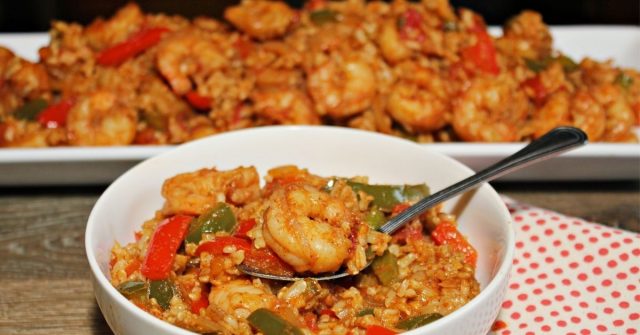
This is a basic Shrimp and Rice recipe with lots of yummy Mexican flavors. It is an easy beginner’s recipe for those fasting times. This recipe is also easy to make oil-free by sauting your veggies in broth versus oil.
To keep this recipe frugal, I keep an eye out all year for deals on shrimp and stock up when it goes on sale. If you have a Kroger or Smith’s near you, they often run their fish and shrimp on sale, and they work great for this recipe.
This is also a good recipe for the budget if you are fasting. You can simply replace the shrimp with ground turkey, beef, or lamb.
I have a video of me making this recipe too, on our YouTube Channel The Orthodox Christian Table. You can find the link to that video down below in the recipe card. I would love to have you subscribe there, too!
Feel free to print out the recipe below and let me know what you think of it if you give it a try.
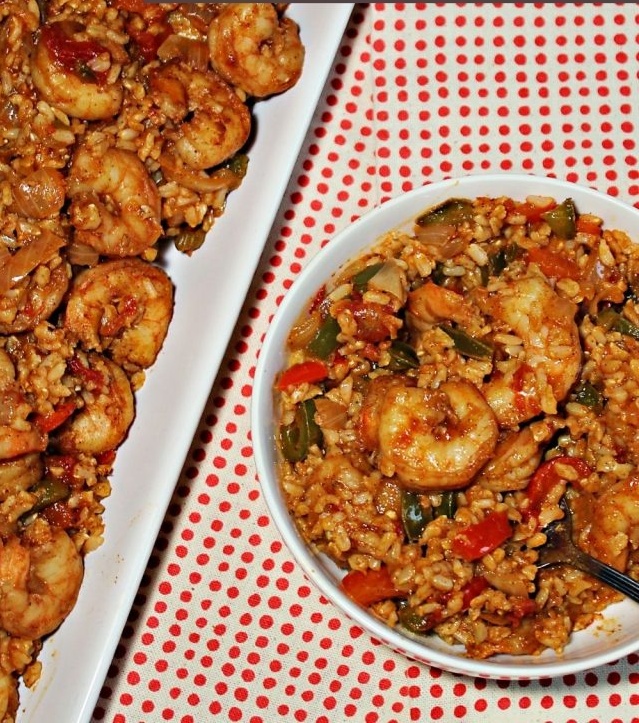
This is an easy Mexican Shrimp and Rice dish that is perfect for those fasting times. It is full of plump shrimp, veggies, and rice.
Thanks to Susan Kurth for our weekly bulletin. Be sure to read over all the information included in the bulletin, and if you have any questions, please see Susan or Father Alexis.
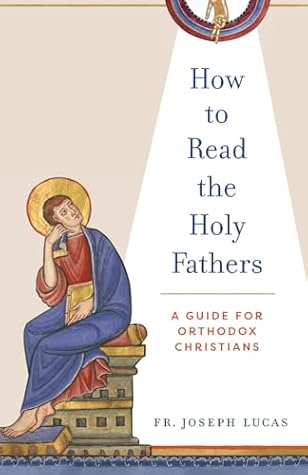
If you’ve always wanted to read the Holy Fathers but don’t know how to do it or where to start, How to Read the Holy Fathers: A Guide for Orthodox Christians is the perfect book for you!
In this book, Fr. Joseph Lucas introduces readers to the beauty and complexity of the Church Fathers’ writings, and he provides guidelines and tools for reading them with wisdom and discernment. He also offers advice on how to apply their works to your own spiritual life.
The book includes an examination of the various genres of patristic writings, using concrete examples to illustrate a proper approach to reading these texts.
I’m an Orthodox Convert of almost 6 years now and have a desire to dig into the writings of the Church Fathers, but I wasn’t sure where to start or if there was a method I should use when doing so.
Fr. Joseph Lucas’ book has really helped me understand more about how to read the complex writings of those who lived this faith before us. In this book, the author breaks the sections down for us, like introducing us to the fathers and how we should be using the context of their times to help us better understand and discern their writings.
The book covers different types of writings like letters, Hymnography, Liturgical Commentaries to name a few of them.
In each of these chapters, where he covers the different types of writings, Father Lucas helps us look at two fathers and some context for each. I really enjoyed using this book as my first dip into these historical writings that are important to our church.
To me, it was a great outline that was so helpful for those of us needing some guidance when we are starting with these types of writings. I’m thankful I was given the chance to read this insightful book in return for a fair and honest review.
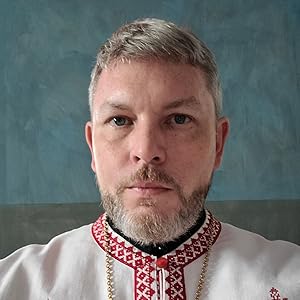
Father Joseph Lucas received his PhD in Theology at Radboud Universiteit Nijmegen (Netherlands) and his MDiv with Distinction in Church History and Patristics at St Tikhon’s Orthodox Theological Seminary (Pennsylvania). He specializes in research pertaining to patristic exegesis and historical theology. He is also a founder and senior editor of “Rule of Faith Journal” and blogs at “Prudence & Piety.”

Introduction The Sunday of Forgiveness is the last Sunday prior to the commencement of Great Lent. During the pre-Lenten period, the...
Judgement (Meatfare) Sunday Introduction The Sunday of the Last Judgment is the third Sunday of a three-week period prior to the commencement...
Sunday of the Prodigal Son Introduction The Sunday of the Prodigal Son is the second Sunday of a three-week period prior to...