This is a basic Shrimp and Rice recipe with lots of yummy Mexican flavors. It is an easy beginner’s recipe for those fasting times. This recipe is also easy to make oil-free by sauting your veggies in broth versus oil.
To keep this recipe frugal, I keep an eye out all year for deals on shrimp and stock up when it goes on sale. If you have a Kroger or Smith’s near you, they often run their fish and shrimp on sale, and they work great for this recipe.
This is also a good recipe for the budget if you are fasting. You can simply replace the shrimp with ground turkey, beef, or lamb.
I have a video of me making this recipe too, on our YouTube Channel The Orthodox Christian Table. You can find the link to that video down below in the recipe card. I would love to have you subscribe there, too!
Feel free to print out the recipe below and let me know what you think of it if you give it a try.
Yield: 6 to 8 servings.
Shrimp and Rice
No Ratings
This is an easy Mexican Shrimp and Rice dish that is perfect for those fasting times. It is full of plump shrimp, veggies, and rice.
Prep Time20 minutes
Cook Time30 minutes
Total Time50 minutes
Ingredients
2 pounds peeled and cooked scrimp
2 cups uncooked rice
1 large red bell pepper, chopped
1 large yellow bell pepper, chopped
1 large onion, chopped
1 (14 ounces) cans of diced Fire Roasted Tomatoes
(or 2 cups of your favorite salsa)
1 to 1/2 cups of broth
2 teaspoons of garlic powder
2 teaspoons of onion powder
1 teaspoon of chili powder
1 teaspoon of cumin
1 teaspoon smoked paprika
salt and pepper to taste
Instructions
To begin, prepare the rice according to the directions on the back of the package. Using 2 cups of dry rice will roughly yield 4 1/2 to 5 cups of rice needed for this recipe.
When the rice is cooked, it is time to get started on the Mexican-style sauce that will flavor the rice.
Add the 1 Tablespoon of coconut oil (or 1/2 cup of broth for oil-free) to a large skillet or pot and toss in the chopped onions, bell peppers, and seasonings. Sauté these until they begin to get tender but not mushy.
Next, add in the Fire Roasted Tomatoes or Salsa, depending on which you are using, and the broth. Let this simmer for about 5 minutes and taste the sauce to make sure it has enough seasoning for your liking. Add more if needed.
Once the sauce has simmered, add in the shrimp and stir well so all the shrimp is coated in the sauce, and cook for another 3 to 5 minutes to heat the shrimp through.
Now add 4 to 5 cups of the cooked rice to the shrimp and tomatoes and stir well.
Lastly, after all the rice has been mixed in, you can taste again to determine if more salt is needed. Serve hot.
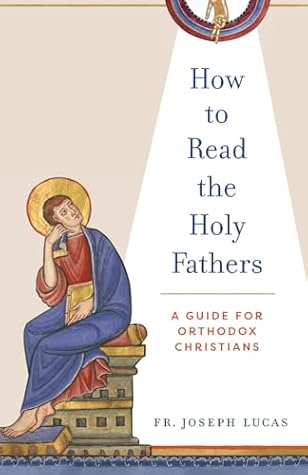
If you’ve always wanted to read the Holy Fathers but don’t know how to do it or where to start, How to Read the Holy Fathers: A Guide for Orthodox Christians is the perfect book for you!
In this book, Fr. Joseph Lucas introduces readers to the beauty and complexity of the Church Fathers’ writings, and he provides guidelines and tools for reading them with wisdom and discernment. He also offers advice on how to apply their works to your own spiritual life.
The book includes an examination of the various genres of patristic writings, using concrete examples to illustrate a proper approach to reading these texts.
My Personal Review and Thoughts:
I’m an Orthodox Convert of almost 6 years now and have a desire to dig into the writings of the Church Fathers, but I wasn’t sure where to start or if there was a method I should use when doing so.
Fr. Joseph Lucas’ book has really helped me understand more about how to read the complex writings of those who lived this faith before us. In this book, the author breaks the sections down for us, like introducing us to the fathers and how we should be using the context of their times to help us better understand and discern their writings.
The book covers different types of writings like letters, Hymnography, Liturgical Commentaries to name a few of them.
In each of these chapters, where he covers the different types of writings, Father Lucas helps us look at two fathers and some context for each. I really enjoyed using this book as my first dip into these historical writings that are important to our church.
To me, it was a great outline that was so helpful for those of us needing some guidance when we are starting with these types of writings. I’m thankful I was given the chance to read this insightful book in return for a fair and honest review.
About the Author:
Father Joseph Lucas received his PhD in Theology at Radboud Universiteit Nijmegen (Netherlands) and his MDiv with Distinction in Church History and Patristics at St Tikhon’s Orthodox Theological Seminary (Pennsylvania). He specializes in research pertaining to patristic exegesis and historical theology. He is also a founder and senior editor of “Rule of Faith Journal” and blogs at “Prudence & Piety.”
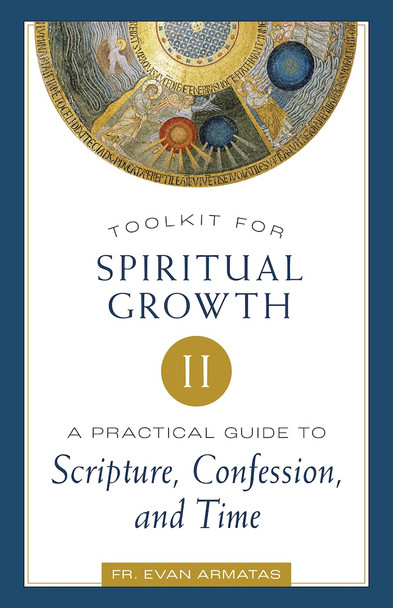
In this sequel to Toolkit for Spiritual Growth: A Practical Guide to Prayer, Fasting, and Almsgiving, Fr. Evan Armatas covers three additional spiritual tools—Scripture, confession, and time. Drawing upon the wisdom of the Old and New Testaments, the Orthodox Church, the saints, and years of pastoral experience, Fr. Evan mixes theology with practical advice and personal stories. Readers will better understand the Sacrament of Confession and the importance of reading the Bible and of living in the present, where the eternal touches ordinary time. These spiritual tools will help us heal and become truly human as they provide support to anyone who seeks to live a transfigured life in Christ.
About the Author:
Father Evan Armatas is a parish priest in Loveland, Colorado, where he has served since 2007. He is the author of two books from Ancient Faith Publishing: Reclaiming the Great Commission: A Roadmap to Parish Health (2022) and Toolkit for Spiritual Growth: A Practical Guide to Prayer, Fasting, and Almsgiving (2020). He hosts a live call-in radio show, Orthodoxy Live, on Ancient Faith Radio, and speaks across the US on various topics. He and his wife, Presbytera Stacy, are the happy parents of four. They enjoy skiing, fly fishing, and hiking.
I’ve been listening to Fr. Evan for over five years, since our family began our journey into Orthodoxy, and I’ve loved his weekly live podcast. When I got the chance to read and review this book, the second installment of the Toolkit for Spiritual Growth series, I knew I just had to. It was just as helpful to me, if not more, than his wonderful podcast. The way Fr. Evan has with words is so comforting. He has a way of explaining things in the church that makes them easy to understand, even for converts like myself who are 5 years in, still having so much goodness to learn.
As I was reading all three sections on the importance of reading the scriptures, confessions, and Theology of Time, I felt as though he and I were having a conversation. It was nice. He offered up wisdom from scriptures, church history, and personal experiences that helped me to see the topic at hand from a new perspective. Again, it just makes this book of wisdom so personal and easy to relate to.
As a former Protestant, converting to Orthodoxy meant I was totally new to confession, and even though I’ve been doing it for a few years now, I still wonder if I’m doing it correctly. If I’m being honest, sometimes I was a little confused about the necessity, since God forgives us, not men (as the church itself teaches us). But with Fr. Evan’s book, he breaks it down practically and explains why the church teaches us to do this and how it is a form of healing for us. Not only did he help me understand, but he also gave some wonderful and very practical ways to approach our confessions, such as how we can prepare, what to expect during, and even some good advice on what not to do. I love that he even shared some of his own confession stories and ways he prepares himself. I’m so grateful he chose to share his personal experience to help us.
I wasn’t sure what the chapter on time was going to be about, but I’m a little shook to my core. He begins by teaching us about two different types of time, and that was so interesting and enlightening, but as I read more into the chapter about all the distractions we choose, yes choose, to let derail us and steal our time, I wept. I’m not even kidding. The words he was saying weren’t rocket science, and I’ve thought about some of them before, but the way Fr. Evan explains all these distractions that keep us from living in the present with God, it just hit me like a ton of bricks. I do that, sadly, I do choose distractions like social media, to avoid the hard things, and I let them steal my precious time away from my more often than I care to admit. Lord, have mercy on me, a sinner! Like Fr. Evan says in his book, these distractions we let steal from us eventually become a habit that is hard to break, but I know with praying, fasting, and the help of Christ, I can overcome the distractions I’ve been choosing. I want my time in the present back!
If you are new to Orthodoxy, this book, as well as the first in this series, is a wonderful place to find easy-to-understand and relatable teachings that are full of wisdom. Even if you are cradle Orthodox, please read these books; it will, if nothing else, be a great refresher for you on all these great tools for our spiritual growth.
Disclaimer:I was blessed to receive a copy of this book from Ancient Faith. In exchange, I agreed to read and offer a fair and honest review. I’m so glad I did read it, and I’m thankful for this opportunity to share my feedback. All the information in this review is of my own accord and my personal reflection.
Where Can I Purchase the Toolkit for Spiritual Growth?
There are a couple of places I know of that you can purchase Fr. Evans’ books. One being on the Ancient Faith Store on their website that I will link to below, and also on Amazon.
You can also find Fr. Evan’s other two books on these platforms as well. I’d love to hear from you if you’ve read this book of his or the first installment!